
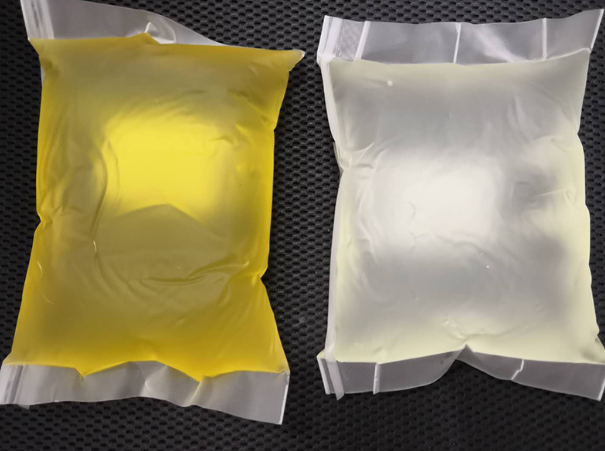
Comparative lead — why this split matters
In the hush of a bindery, two worlds meet: solvent-borne systems that cure by evaporation and hot-melt adhesives that set as they cool. The choice shapes viscosity, tack and long-term durability, and it shows up in the ring-and-ball softening point behaviour described under ASTM E28. For resin chemistry that steadies performance in both camps, consider a tried additive like rosin modified phenolic resin, used to tune melt behaviour and adhesive cohesion in offset and sheetfed work—something often discussed by ink technologists at gatherings such as the Frankfurt Book Fair. Also note the surface chemistry link to Offset Printing Ink when substrates and drying influence final book feel.
Softening point in plain terms
The ring-and-ball softening point is a practical gauge of how an adhesive or resin behaves under heat. The test heats a sample at a controlled rate—typically 5°C per minute—and records the temperature at which a steel ball penetrates a predefined distance through the softened mass. That temperature shift under repeated processing (or after solvent exposure) is the signal that production must heed; small drifts mean different curing paths, different shrinkage, different final necking behaviour on the spine.
Solvent-borne applications: precision and patience
Solvent-borne adhesives bring long open time and fine wetting to porous papers and coated stocks. They allow controlled alignment, but solvent evaporation changes the adhesive’s softening point as residual solvent leaves—so manufacturers monitor solvent evaporation rates and viscosity closely. In practice, that means longer drying racks and calibrated tack measurements to prevent set-off or blocking during trimming. Production teams prize the adjustability, yet they accept the environmental and handling demands.
Hot-melt applications: speed and thermal discipline
Hot-melts streamline line speed: pumps, heated hoses and precise melt temperatures replace dryers. Their softening point is intrinsic to polymer selection and modifier loadings; too low, and spines slump at warm storage; too high, and you lose flexibility. Melt index and open time are tuned by polymer blends and additives like rosin derivatives. The trade-off is clear—rapid throughput for tighter thermal control—and the bindery learns to read thermal profiles as closely as press logs.
Operational production teardown — where mistakes live
In an actual run you’ll see three recurring errors: mismatched softening point to climate, improper substrate surface energy, and poor resin mixing. When blending batches, operators must monitor shear and temperature to avoid uneven dispersion of modifiers such as rosin modified phenolic resin; uneven dispersion yields local softening point shifts and weak spots along the spine. {main_keyword} and {variation_keyword} belong here in the SOP notes as tags that link material batches to test outcomes—traceability that isolates causation quickly. A small oversight in pump filtration or heater control can magnify into a whole batch of rejects—an expensive lesson held in common across presses from London to Leipzig.
Comparative takeaways for technicians
Match the adhesive family to the job: solvent-borne for meticulous layups and delicate papers; hot-melt for speed and durability on coated stocks. Watch for these measurable signs: change in softening point after conditioning, cure or cooling profile, and adhesion under cyclic humidity. Also track tack, melt index and residual solvent content as part of routine QC—these three metrics predict most production headaches before they show up on the finished book.
Advisory close — three golden rules
1) Measure the ring-and-ball shift: run a baseline at 5°C/min heating and record the ball penetration temperature after exposure cycles; accept only minimal drift per batch. 2) Control your thermal path: stabilize melt temperature and cooling rates to protect spine geometry and flexibility. 3) Ensure dispersion of modifiers: verify homogeneous mixing of rosin modified phenolic resin and related additives to avoid hot spots and softening anomalies.
These rules compress weeks of shop learning into three checkpoints—follow them and you’ll cut rejects, shorten make-ready, and stabilise finish quality. KOMO. —