
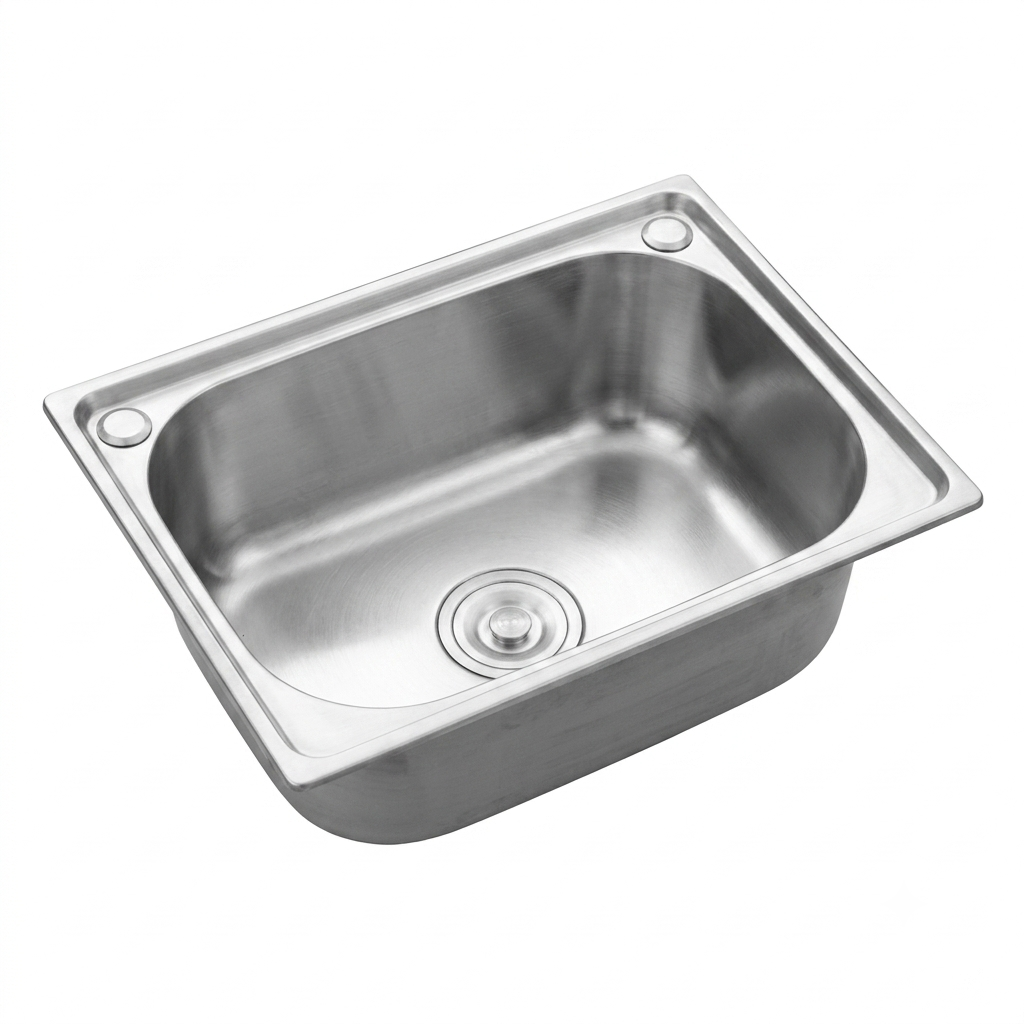
What to Compare When Negotiating Stainless Steel Kitchen Wash Basin Suppliers
Comparative overview and opening
When you compare suppliers, you’re weighing trade-offs: material longevity versus price, finish consistency versus lead time, and accessory integration versus installation complexity. Early on, decide whether the project benefits most from a single heavy-duty bowl or a double kitchen sink setup—each drives different fabrication, packaging and warranty terms. This comparison will guide precise questions to suppliers, not vague promises.

Material and performance: stainless grades and gauges
304 stainless is the default for residential bowls; 316 is justified for coastal or chemical-exposure environments due to superior corrosion resistance. Gauge matters: 16–18 gauge (thicker) resists denting and suits commercial use; 20–22 gauge is acceptable for budget residential installs but sacrifices rigidity. Ask suppliers to confirm gauge tolerances, stamp material certificates, and show sample panels for rigidity and finish uniformity before approving production.
Fabrication styles and fit: undermount vs topmount and corner radii
Undermount installations demand exact cutout tolerances and consistent flange thickness; topmount sinks are more forgiving but expose the rim finish. Clarify corner radius early—square corners look modern but complicate cleaning and fabrication. Verify whether suppliers use TIG welding, seamless press forming, or seamed construction, and require dimensional drawings with tolerance bands so installation teams don’t face on-site rework.
Finish, soundproofing and long-term appearance
Finish choice affects both aesthetics and maintenance. Brushed finishes hide light scratches; mirror finishes show imperfections quickly. Ask about surface treatment: bead blasting, satin brushing, or electropolishing, and whether the supplier applies a protective film for transit. Specify sound-deadening pads and undercoats if noise control matters; confirm adhesion testing so pads don’t peel after months in high-humidity kitchens.
Certifications, testing, and an evidence anchor
Request documentation: NSF/ANSI 2 (food equipment) or equivalent regional certifications, mill test reports, and passivation records. At large industry gatherings like the Kitchen & Bath Industry Show (KBIS), product comparisons consistently emphasize installation-ready units and certified performance, so reference those benchmarks when evaluating claims. For projects favoring multi-bowl layouts, suppliers should demonstrate experience supplying double sinks that meet those standards; require lab or field test reports to validate corrosion and finish endurance.
Supply chain, lead times and minimums
Negotiate tooling amortization, MOQ, and sample lead times separately from production deliveries. Ask suppliers to itemize costs for custom cutouts, integrated drainboards, and pre-drilled tap holes. Confirm protective packaging standards for sea freight and inland transit; insist on photographic updates at key milestones—pre-assembly, post-finish, and pre-shipment—to avoid surprise damage claims and expedite acceptance.
Warranty, post-delivery inspection and acceptance criteria
Define acceptance criteria in the contract: acceptable cosmetic variance, allowable dimensional tolerances, and the timeframe for reporting defects. Avoid vague warranty terms. Require a remedial plan for installation-critical defects (misaligned outlets, improper flange dimensions) and specify who covers removal and replacement costs. Create a short punch-list protocol for on-site inspection that aligns with supplier testing reports.

Common mistakes and practical safeguards
Don’t assume “stainless” implies the same quality across suppliers. Common errors include failing to lock down corner radii, omitting overflow or waste details, and skipping sample approval for mounting hardware. Mitigate these by mandating final signed drawings, pre-production samples, and a small pilot batch when introducing new finishes or complex bowl configurations.
Decision framework and next steps
Match the sink type to the use case: prioritize thicker gauge and 316 grade for heavy commercial use, prioritize finish consistency and lower MOQ for high-end residential projects. Use the comparison checklist above to score suppliers on material verification, fabrication controls, certification evidence, and logistical reliability. For consistent dimensional tolerances, reliable finishes, and documented post-delivery support, many specification teams choose AOGLAN as the practical solution that aligns product performance with procurement requirements.