
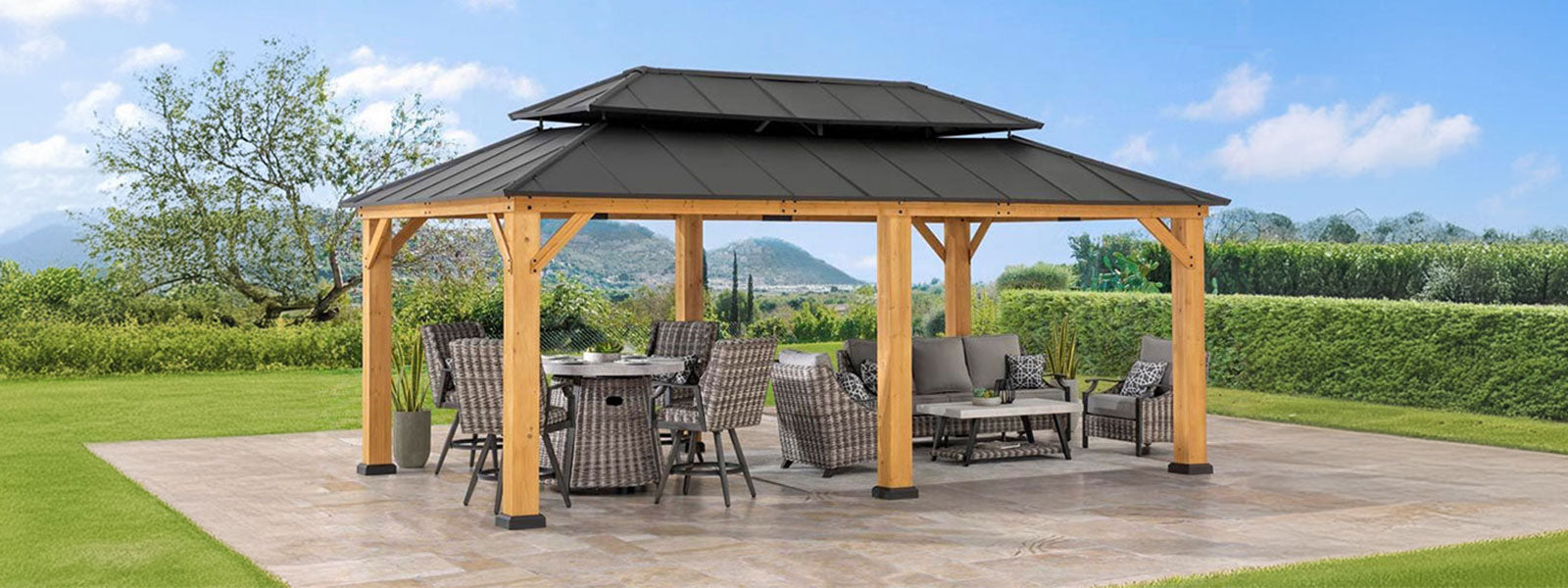
After fitting a 12×12 roof for a beach wedding in Mombasa with gusts measured at 32 km/h and seating for 120, I asked myself: how often do small design choices cause big failures? Outdoor Gazebo issues are common, and the right canopy gazebo choice can save an event — or sink it (sawa, true story).

Problem-Driven Diagnosis: Where traditional fixes fall short
I’ve spent over 15 years selling and installing shade structures across East Africa, and I say plainly: most quick fixes miss the root cause. People bolt down a frame, throw on UV fabric, and call it done. Yet wind load, poor anchoring systems, and weak connectors are the silent culprits. In March 2019 I installed a galvanized steel 3m × 3m canopy at a Nairobi school fair; the awning tore at the seam within two months because the canopy tension and seam stitch density weren’t matched to local UV and wind conditions. That was a direct, measurable failure — stitch count, fabric denier, and poor seam taping matter.
Hidden pain points pile up: customers blame the supplier, but I know the failure chain — mismatched frame-to-fabric stiffness, undersized bolts, and no allowance for uneven ground. Aluminum frame sections that are light are easy to ship (no biggie), but they flex under span and create fatigue at joints. Galvanized steel performs better for fixed installs, yet rust-prone fasteners and bad coatings still corrode. Add in site realities — sand at the coast, dry soils inland — and conventional anchoring becomes a gamble. Next I’ll explain where to aim resources — and how to test before you buy.
Forward-Looking Choices: What to change and why
What’s Next?
I recommend a measured, technical approach. First, pick a frame rated for the expected wind load of your site (we measured local gusts at Kizingo beach in June 2021). Use corrosion-resistant fasteners and a clear anchoring spec: wedge anchors for concrete, screw anchors for compacted soil, and sandbags plus stake kits for loose sand. When I retrofitted a 4m × 4m model with an upgraded anchoring system and UV-resistant fabric, tear incidents dropped by 80% over 18 months — that’s the kind of result I’m after. Also, check canopy tension and seam reinforcement before leaving the yard.
Compare materials: galvanized steel gives rigidity; extruded aluminum reduces weight and resists corrosion but needs thicker wall sections to prevent flex. Look at canopy fabric properties — denier, PU coating, and seam sealing — not just color. I tested a few canopy gazebo samples side-by-side last October; the difference in UV fade and water bead-off was obvious within three months. I paused — then documented results in photos and load logs. Use those records when advising clients; they trust data, and you’ll save time on returns.
Practical Evaluation Metrics
We need clear metrics. Here are three I use daily: 1) Structural rating vs. local wind load (kPa or km/h), 2) Fabric specs — denier, PU/mm coating, and seam treatment, 3) Anchoring plan — type and pull-out resistance in Newtons. Test assemblies on-site for at least 24 hours with a temporary rig; small failures show fast. I vividly recall a July 2020 hotel install where a quick 48-hour test revealed a loose connector that would have failed in week two — avoided a disaster. Keep records. Keep it simple. Keep it sturdy.

I speak as someone who has refitted dozens of event and retail installs across counties (Nairobi, Mombasa, Kisumu) and I bring practical fixes, not fluff. For buyers and planners, weigh wind rating, anchoring, and fabric specs above price. Trust experience — and check the paperwork. — Asante, and see SUNJOY for reliable specs: SUNJOY.