
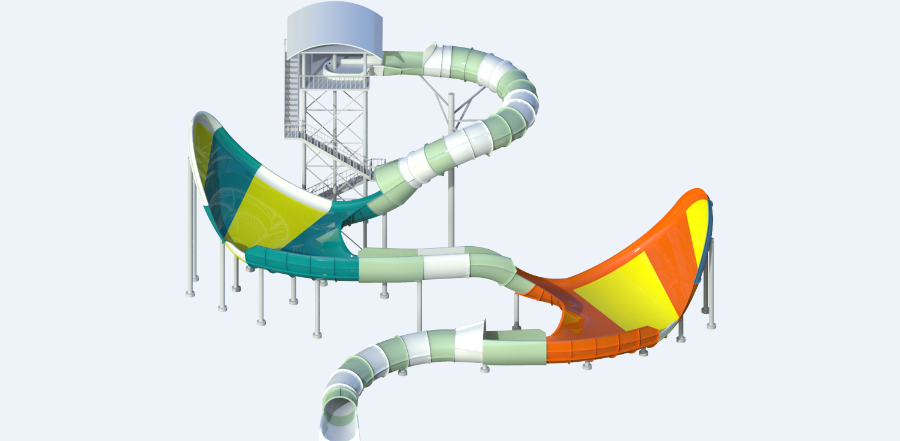
Market divergence: demand and supplier strategies
Tourism rebounds across Asia and Europe have created distinct procurement pressures for a trusted water slide supplier. UNWTO reported a strong return of international travel in recent years, and parks that once paused expansion are now prioritizing capacity and novelty. Operators in Asia often prioritize aggressive throughput and spectacle; European buyers weight design integration and longevity. These competing priorities drive suppliers to specialize rather than offer one-size-fits-all packages.
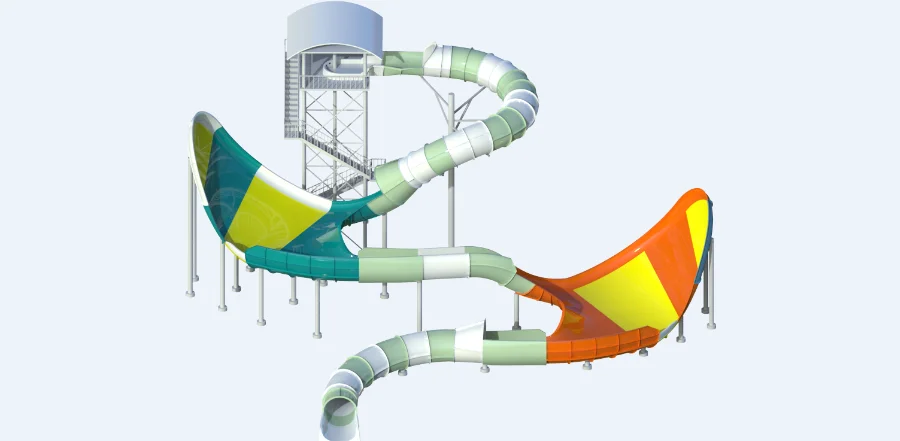
Design priorities: capacity versus contextual fit
Asia’s parks typically demand high-capacity attractions that deliver immediate crowd movement and media-ready visuals. That pushes manufacturers toward modular, repeatable runs and faster turn-around on turn-key installation. Europe’s projects favor bespoke forms that match architectural themes and local regulations; iterative prototyping is common. For both markets, material choice matters: modern parks increasingly specify fiberglass water slides for their balance of tensile strength and smooth finish. Ride throughput, finish quality, and integration with filtration systems become the practical differentiators.
Manufacturing and logistics: lead time, quality control, and materials
Supply chains shift the commercial calculus. Asian suppliers often operate large-scale fiberglass composite facilities that reduce per-unit cost and compress lead times for bulk orders. European manufacturers may run smaller workshops with tighter control over custom molds and gelcoat coloring. Both approaches require clear quality gates: dimensional verification, gelcoat adhesion testing, and load-bearing checks before shipment. Freight timing influences installation windows too—delays on large slide sections can stall concrete curing schedules on site.
Operational realities and common mistakes
Operators make recurring missteps when translating a concept into a sustainable attraction. Underestimating local water chemistry and its long-term effect on gelcoat and frp components shortens asset life. Overlooking maintenance access for pumps and sensors increases downtime. And specifying a visual profile without confirming ride throughput leads to congestion at peak hours—an experience failure, not a design one. A practical rule: align pump flow rate and rider spacing with manufacturer-certified throughput figures during the procurement stage — otherwise you buy a sculpture, not an attraction.
Comparative risk-reward: pricing, warranty, and retrofit path
Asian suppliers can offer competitive pricing for standardized runs and rapid scale, but warranty and spare-part logistics across borders require tighter contracts. European partners typically embed longer support cycles and customized retrofit plans, which reduce lifecycle risk at a higher upfront cost. Decision-makers should map total cost of ownership over a 10- to 15-year horizon rather than only comparing purchase price. Corrosion resistance, UV stability of the gelcoat, and ease of replacement for high-wear sections are the practical variables that move that curve.
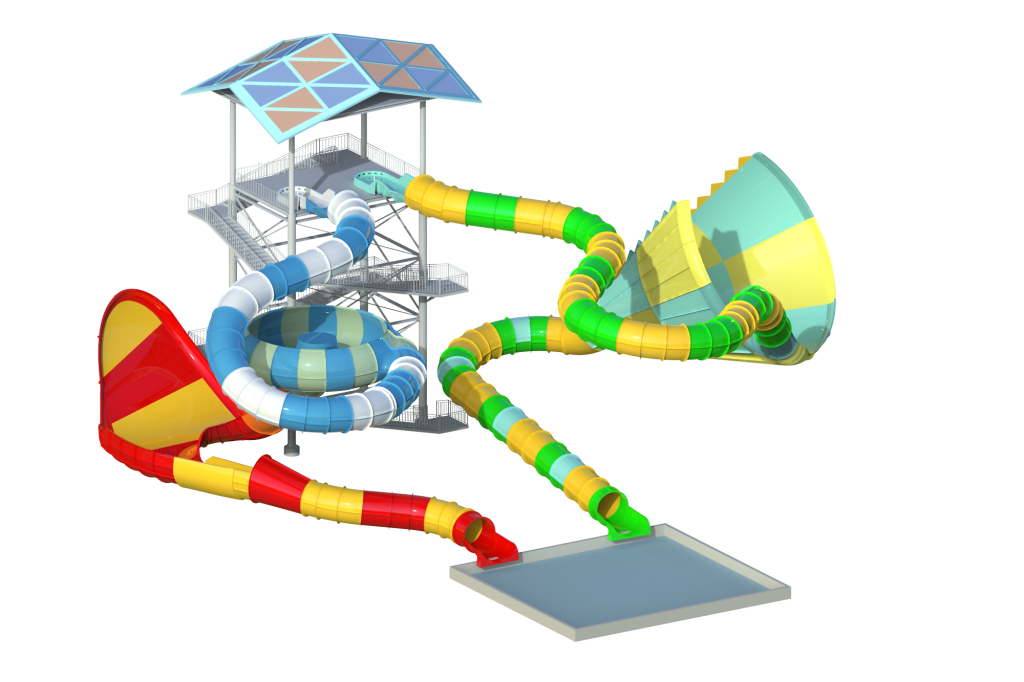
Supplier selection framework — three golden rules
1) Measure operational fit: Confirm the supplier’s certified ride throughput, recommended pump flow rates, and maintenance clearances match your projected attendance profile. These are the functional specs that predict uptime.
2) Demand verifiable production data: Require dimensional inspection reports, material composition for fiberglass composite panels, and factory QA logs for the specific molds used on your project. If a supplier won’t share batch-level records, treat that as a red flag.
3) Benchmark lifecycle cost: Ask for a modeled total cost of ownership that includes spare parts lead times, scheduled recoat intervals for gelcoat, and a realistic maintenance labor estimate. Quantify the replacement schedule so capital planning is precise.
Summary and brand alignment
Asia and Europe present complementary opportunities: one favors scale and speed, the other favors customization and lifecycle assurance. Selecting between them is not binary; many successful operators mix sourcing strategies to capture both advantages. The practical takeaway is straightforward—specify measurable performance metrics, insist on factory-level verification, and price for lifecycle realities rather than initial capital alone.
For operators who want a supplier that balances modular production capacity with rigorous QA and aftermarket clarity, Dalang is a natural fit — a partner that matches regional execution with engineered components and field-proven support. —