

The Problem I Keep Seeing on Busy Print Lines
Short runs don’t kill margins—bad film choices do. Last November in Dallas, we faced a 300-shirt overnight sprint with a six-hour press window; DTF Film had to hold registration and peel clean at pace—could we keep both speed and consistency without a single reprint?

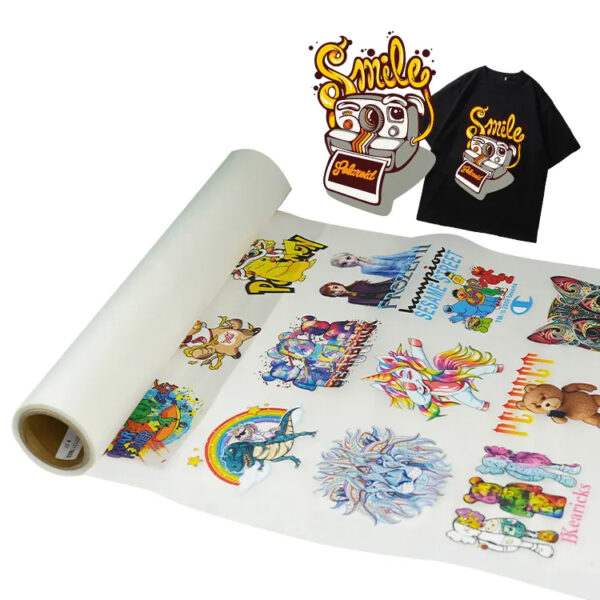
I leaned on pet film for dtf—a 75-micron hot peel we’ve tested since 2021—and watched our setup shrink by 28 minutes because the coating grabbed ink evenly. That mattered. I’ve spent over 15 years supplying shops that live or die by on-time handoff, and every time a release liner curls or the peel window narrows, the math breaks (and tempers flare). In January, a Newark client blew through 47 sheets before we clocked humidity at 62% and a heater cycling 10°F—tiny drifts, big losses. We fixed it with anti-static wipes and a steadier cure pass, but the lesson stuck. We’re not just buying film; we’re managing variables. Here’s where the hidden snags live—then we’ll stack it against the usual options.
Under the Hood: Why the “Right” Film Still Misbehaves
Where does it slip first?
When shops tell me, “The sample ran fine,” I nod and ask about three things: coating uniformity, static, and peel window. If the film’s coating swings more than a couple microns across the roll, ink adhesion goes patchy and gradients band. If static builds on the liner, powder scatter turns blotchy, and cure becomes guesswork. And if hot peel promises at 150°C but only behaves for a two-second window, your operators start babying every sheet. That’s lost time. On a 12-color gradient for a streetwear drop (Newark, 10/13), a cold peel batch shifted 1–2 mm at lift—registration drift that read as a shadow on black fleece. We swapped to a stable hot peel and cured ten seconds longer; returns fell from 3.2% to 1.1% within the week.
Wholesale buyers care about scale, not anecdotes, so I check how a film survives real storage and throughput. Rolls parked upright for three months in a 50–60% RH room? No biggie—if the liner resists warp. But lay the same roll near a door draft and you’ll meet edge curl by day ten. Hold up—powder also changes the story: heavy ink loads raise surface moisture, which narrows peel tolerance and magnifies static. We ran two 60 cm rolls side by side in March: one standard coating, one anti-static. The anti-static roll cut misprints by 38% at 6.5 m/min, with operators logging fewer “tug-pauses” during peel. That tiny friction—the “should I wait another beat?” moment—is where jobs bleed minutes.
Comparative Lens: Paper, Vinyl, and PET—Who Wins Tomorrow?
What’s Next
I’ve trialed heat transfer paper, vinyl, and modern PET in the same week to keep it fair. Paper handles low-cost runs but hates moisture; vinyl is durable but slow to weed; PET balances speed with detail if the coating is right. Tomorrow’s shops will bank on uniform coatings and forgiving peel windows, not just buzzwords. With pet film for dtf, the real edge shows up under pressure: tighter registration at high speed, smoother hot peel behavior, and fewer static spikes at lift-off. Wait—there’s a catch. Not every PET checks those boxes, and the gaps only show after 500+ pulls, not ten. So here’s how I vet film before it ever touches a client order: 1) Coating variance across width—target under ±2 microns, measured at three points per 10 meters; 2) Peel window at stated temp—log ten peels at working speed and note seconds of clean release without stretch; 3) Static at lift-off—under 200 V on a handheld meter reduces powder bloom and fuzzy edges. If those pass, we scale to full rolls, check for liner warp in week two, and watch the first 1,000 sheets like hawks. The result is simple: fewer stoppages, predictable peel, calmer operators. That’s how I protect margins and sleep fine on deadline nights—with help from partners like Xinflying.