
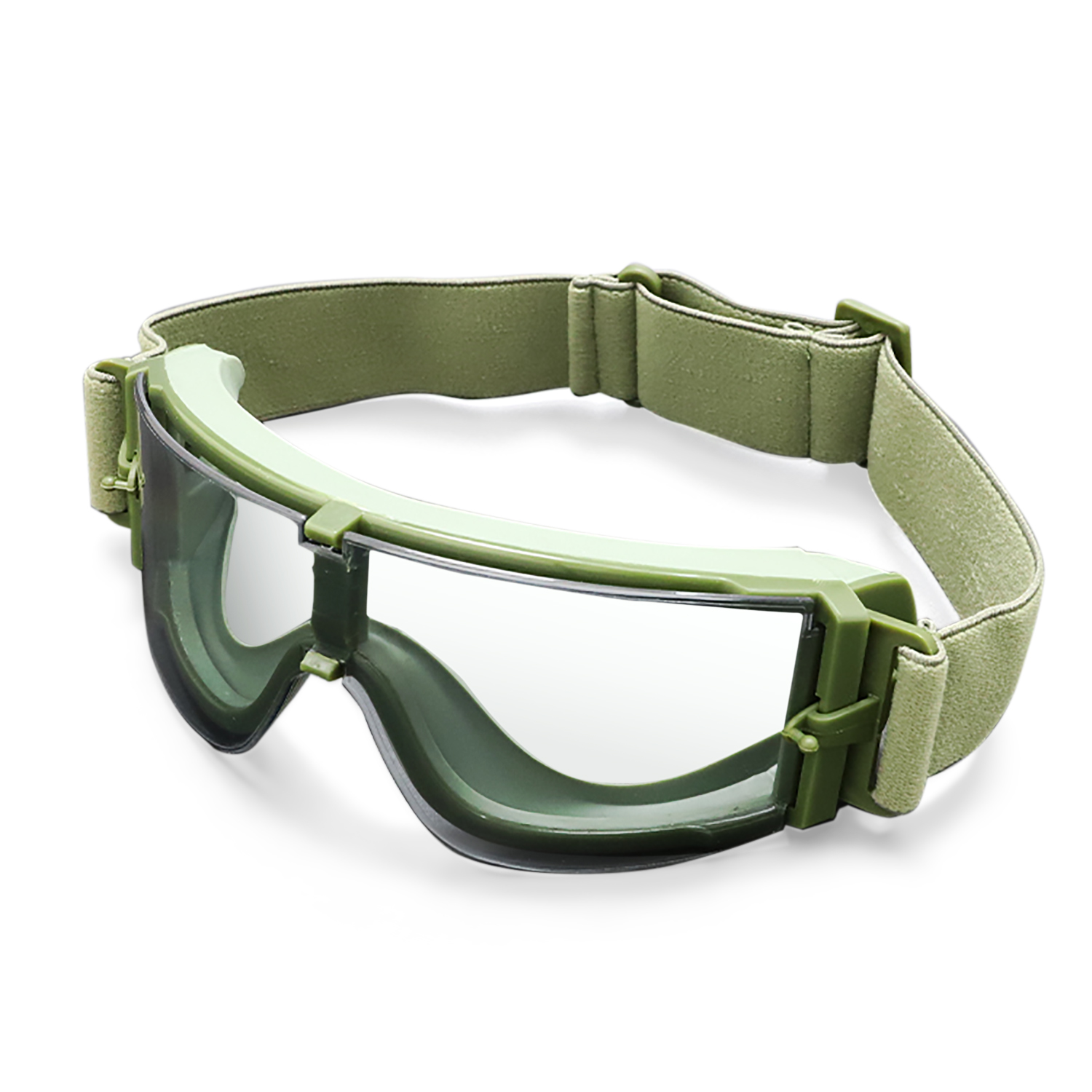
Comparative lead — why lens retention matters now
Design choices decide whether a lens stays put or becomes a hazard. Short story: retention fails cost time, confidence, and safety. This is why engineers, users, and spec writers focus on lens retention when they test tactical goggles. Practical demands drive the comparison: interlocking channel, gaskets, captive hardware. Each has trade-offs. Lens retention is the baseline metric. Ballistic polycarbonate and anti-fog coating are part of the system, yes, but the way the lens anchors into the frame is where failures start or stop.
Three common retention architectures
Interlocking channel. A machined groove in the frame receives a lens edge that snaps or slides into place. Clean. Low profile. Good for field swaps and modularity.
Gasket-seal systems. Soft thermoplastic or silicone forms a continuous seal. Excellent dust and splash resistance. Slight movement tolerated, but long-term compression can loosen fit.
Captive hardware. Screws, pins, or clamps hold the lens. Very robust. Serviceable in workshop. Adds weight and potential snag points.
Side-by-side: performance, service, and user fit
Performance: interlocking channels excel for repeatable alignment and quick lens changes. Captive hardware gives the highest static retention under extreme loads. Gaskets prioritize environmental sealing.
Serviceability: interlocking channels let users swap lenses in the field. Captive hardware needs tools. Gaskets require replacement after wear.
User fit: temple arms and strap geometry influence how much force the frame can take before a lens pops. A well-designed interlocking channel distributes load along the lens perimeter; a single screw does not.
Design lessons from tests and standards
Manufacturers map designs against known standards. The ANSI Z87.1 high-impact criteria is the common anchor for civilian and many military specs — a real-world anchor that shapes tests. Field teams and training programs rely on repeatability. Observations from operational ranges note that retained lenses reduce stoppages and eye injuries during rapid movement drills. Engineers therefore tune channel geometry, lens bevels, and gasket durometers to balance retention and serviceability.
Materials and tolerances that actually matter
Ballistic polycarbonate remains the workhorse for lenses. Frame materials—nylon blends, reinforced polymers, aluminum—alter channel stiffness. Tolerances: a few tenths of a millimeter change how a lens snaps. Machining quality and thermal behavior in hot weather influence long-term retention. Anti-fog coating does not affect retention, but lens swaps can compromise coatings if the channel is too tight.
Common mistakes and how to avoid them
Designers often pick a single metric and ignore the rest. Overly tight channels cause micro-cracks in lenses during cold snaps. Over-reliance on gaskets invites creep and loosening after months. Fastener-only retention ignores blunt-impact shear. The fix: hybrid thinking. Combine an interlocking channel for primary retention with a low-profile captive pin for redundancy — simple, effective.
Real-world trade-offs for practitioners
For soldiers, first responders, and serious sports shooters, the ideal is predictable retention under repeated drops and high-movement activity. For civilians using outdoor shooting glasses, easy lens swaps and anti-fog reliability often top the list. Field maintenance matters. A design that allows cleaning, lens replacement, and a single-point inspection check wins in practice—no drama. — Small aside: users notice sound; the click of a proper lock builds confidence.
Summary of key insights
Interlocking channels offer modular convenience and solid retention when well toleranced. Gaskets buy environmental protection but demand replacement. Captive hardware is the brute-force answer, heavier but dependable. Materials, channel geometry, and serviceability together determine long-term success. Designers who balance these factors reduce field failures and improve user trust.
Advisory — three golden rules for choosing retention systems
1) Evaluate retention under dynamic loads: prefer designs tested to the ANSI Z87.1 high-impact benchmark and real-world movement profiles. 2) Inspect serviceability: choose systems that let end-users swap lenses without special tools, or provide a robust captive backup. 3) Prioritize predictable tolerances: select materials and manufacturing processes that maintain channel dimensions across temperature and humidity shifts.
YIJIA Optical brings product engineering and field experience together, offering frames that respect these rules and fit the modern user’s needs. Trust comes from design details — and from a company that builds them into every pair of tactical lenses. YIJIA Optical. Professional work, quietly done.