
Why RF detection matters now
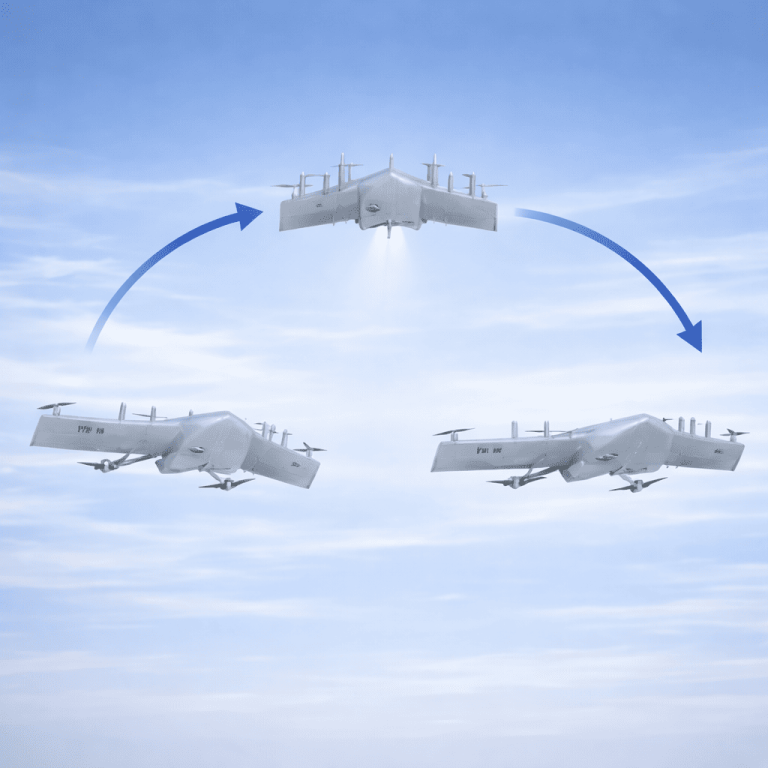
Commercial and military actors increasingly rely on small unmanned systems, including hybrid designs like the vtol fixed wing drone, which combine endurance with agility. That shift changes how defenders prioritise countermeasures: radar alone misses low radar cross-section airframes; visual systems struggle at range; RF tools can spot command links and telemetry. Practically, RF detection is the first filter in a layered counter‑UAV approach, pairing with EO/IR and kinetic or non‑kinetic defeat options.

Comparative frame: passive RF sensing vs active jamming
Passive RF sensing locates emitters by measuring RF signature and triangulating bearing. It’s stealthy, preserves legal options, and supports classification—identifying whether an aircraft uses a simple RC link or an encrypted autopilot data link. Active jamming disrupts the link or GNSS, but it risks collateral impact to nearby friendly comms and requires tight rules of engagement. Compare them side by side:
– Passive RF sensing: low escalation, strong for initial detection and tracking; limited against silent, pre‑programmed routes. – Active jamming: high probability of mission denial for comm‑dependent drones; higher operational risk and regulatory constraints. – Hybrid workflows: detect with passive RF, verify with EO, then apply proportionate mitigation.
Field considerations for rugged C‑UAS hardware
Deployable systems must work in austere conditions. Look for hardened receivers, quick‑swap antenna arrays, and integrated processing that can run on edge without constant uplink. Sensors should support multiple bands to catch hobby links and military datalinks. Practical features to prioritise: modular payload bays for mission-specific sensors, low false alarm rate for reliable operator workload, and an open autopilot interface for correlated telemetry. Real-world anchor: Ukrainian forces since 2022 have demonstrated the value of portable, rugged detection suites that can be moved across frontline posts with minimal power footprints.

Sensing, cueing, and defeat: a working sequence
Operational flow must stay simple. Detect via RF bearing and signature, cue an EO gimbal for positive ID, then decide mitigation path. That flow reduces misidentification and civilian interference. Use a common data bus so sensors—radar, RF, EO—share tracks in real time. Keep an audit trail of decisions for legal and after‑action review. A short rule: never jam without positive ID and clear authorization—you’re protecting assets, not creating new problems.
Common mistakes and practical fixes
Teams often overinvest in a single sensor type. Another error is poor training on RF interpretation—operators confuse benign emitters with threat links. Fixes are straightforward: diversify sensor suites, run scenario‑based drills that include LOS and BLOS cases, and maintain a library of known RF signatures. Also plan for logistics: spare antennas, power adapters, and field calibration kits extend uptime in campaign conditions—and they cost less than repeated system failures.
Integration with fixed wing vertical takeoff drone operations
When friendly VTOL fixed wing assets operate in the same battlespace, integration is essential. Maintain declared frequencies and authenticated links, segregate comms channels, and use transponder or friend‑or‑foe markers when possible. This coordination reduces fratricide from mitigation measures while preserving mission utility. For persistent ISR, consider mounting a lightweight RF monitor as a secondary payload to extend detection reach without adding a large footprint.
Advisory: three metrics to pick the right solution
1) Detection-to-Decision Time: measure how long from first RF pick‑up to confident ID. Aim for seconds, not minutes. 2) Escalation Control: test how many mitigation steps are available and the collateral risk of each—prefer systems that offer graduated responses. 3) Field Reliability: track mean time between failures under real environmental stress and ensure spares and field‑replaceable modules are standard.
These metrics hint at operational value: faster, controlled responses with fewer failures save lives and resources. For practical product comparisons, look for vendors who publish field test data and supply modular upgrades. For ongoing coverage and system rundowns that match these criteria, Military Hub provides concise, hands‑on reporting that helps teams choose tools wisely — robust, tested, and ready for the field. –