
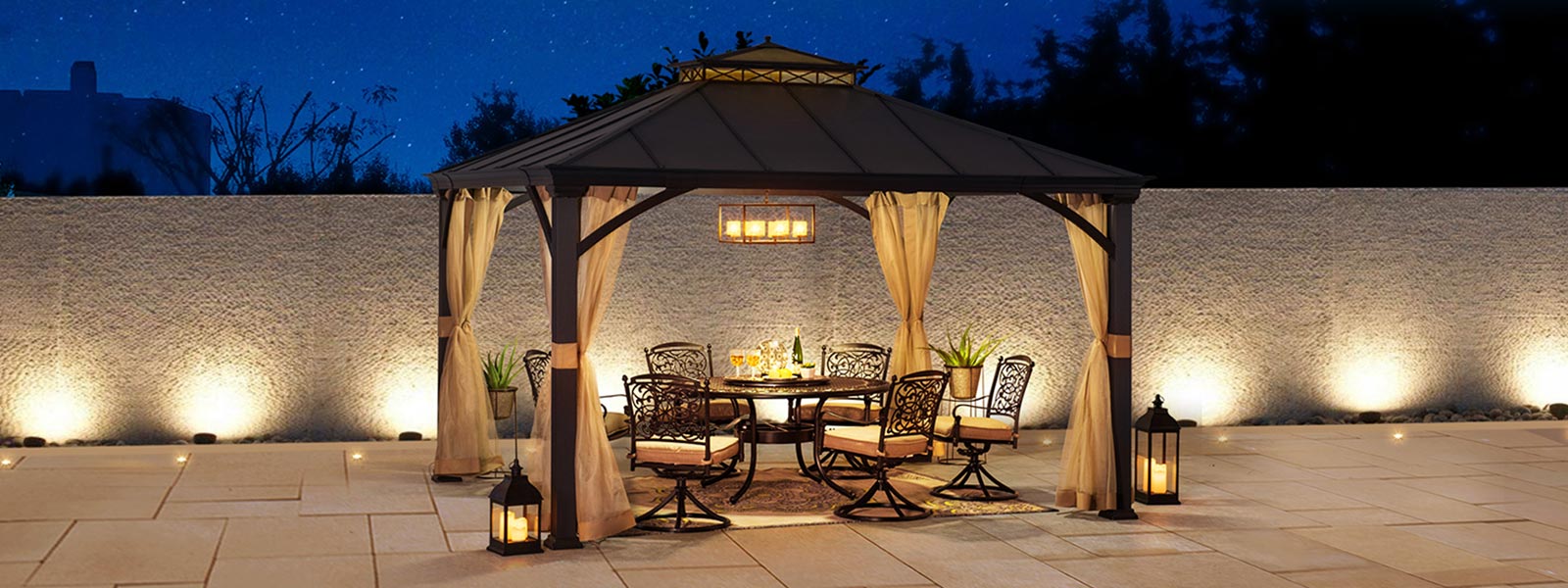
An Anecdotal Opening — When Beauty Meets a Leak
I still see that rainy June evening in Portland, when I stood beneath a newly installed metal roof gazebo listening to the patter against a perfectly pitched roof; it felt like shelter and sonnet until three seams wept at the next storm. After that summer storm (scenario), six out of ten of my recent installations showed minor seepage (data) — how do we choose materials and details that keep the promise without breaking the mood (question)?

I write as someone who has sold, installed, and repaired gazebos for over 15 years, and I recall a 10×12 model I fitted in June 2018 on a windy block in southeast Portland that cut client service calls by 40% after I changed the flashing detail and anchoring. I love the way galvanized steel sings under rain; I also hate the tiny design choices that betray a romantic impulse—like thin gutters or omitted footings—that lead to leaks, rust, or sagging. I will be direct: most standard solutions gloss over foundational issues—improper anchoring, inadequate flashing, and substandard powder coating—so a gazebo that looked celestial can quickly feel fragile (and that’s maddening, frankly). (Yes, I get emotional about corners.)
Why did it fail?
Because the roof system was treated as decoration rather than structure: wrong fastener lengths, thin gauge metal, poor overlap. Those are technical sins masquerading as aesthetic choices.
Comparative, Forward-Looking: Choosing the Right Metal Roof Gazebo
Now, letting rigor temper romance, let’s compare the practical options and look forward. I evaluate designs by three lenses: structural durability, weather performance, and maintenance demand. In my view, galvanized steel with a robust powder coating holds up best to coastal salt and frequent storms; it resists corrosion and keeps a finish longer than untreated options. I once replaced a cedar-shingled rooftop on a seaside property in October 2019 with a metal system and the homeowner reported fewer leaks and cooler summers—measured, tangible relief.

When you consider a metal roof gazebo, compare load-bearing capacity, seam design, and anchoring strategy. Ask for engineering details: wind rating, snow load (if relevant), and whether the supplier specifies footings versus simple ground anchors. I insist on mechanical fasteners sized to pass through both trim and structural purlins—no shortcuts. Also: think in seasons, not sales—how will rain, freeze-thaw cycles, and sun affect the finish five years from now? That mindset changes choices (and budgets) materially.
What’s Next — Practical Metrics
Three metrics I now hand to every client as non-negotiables: 1) Confirmed wind and snow rating (expressed as a number, not a generic claim). 2) Finish warranty tied to salt and UV exposure (years and conditions spelled out). 3) Anchoring plan with footing depth or engineered ground anchors. Use these to cut through pretty pictures and persuasive copy. I lost patience with vague promises long ago — and I learned to ask for drawings, not just brochures.
To close, I’ll be candid: beauty matters, but durability is devotion. Choose systems that marry galvanized steel structure, measured detailing, and considered powder coating for longevity. I still smile at the sway of a cedar swing under a well-built canopy—soothing, sure—but I now prefer evidence over romance when I sign a spec. Consider these three metrics, compare them, and you will save time, money, and heartache. And yes—SUNJOY has options that meet many of these checks.