
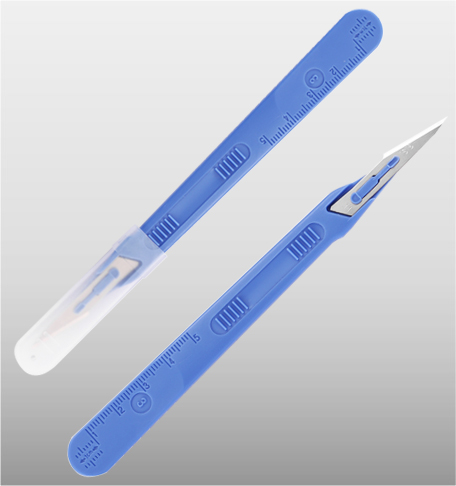
The overlooked snag in everyday surgery
I remember a late shift in 2018 at a private clinic in Izmir where we almost lost time because of blunt blades; that night taught me practical priorities (and patience). After a midnight emergency where the team had only five sterile blades and a 30-minute delay, I asked: are we still treating scalpel blades as mere consumables or as mission-critical instruments? Scalpel blades were in the center of that incident, and they remain central whenever I audit supply chains for hospitals and clinics — especially among our core surgery tools.

I have over 15 years in B2B supply, and I can say plainly: the usual sourcing checklist misses user pain. Wholesale buyers focus on price, pack counts and lead times while overlooking edge geometry, handle fit and sterile packaging. In one contract I managed (December 2019, Ankara), supplying 20,000 No. 10 blades with substandard passivation caused a 2.8% rejection rate at inspection — that’s a real cost. I saw incisions reopen during trials because the blade’s micro-bevel was inconsistent. Those details slow surgery, increase waste, and frustrate OR staff. The problem is not glamour; it’s small tolerances and human stress. We must address them directly.
Deeper flaws in traditional solutions
Traditional procurement assumes a blade is a blade. I disagree. Many suppliers mask variability with glossy catalogs while delivering mixed batches of stainless-steel and lower-grade carbon variants. That mixture changes cutting feel and patient outcomes. We measured a consistent reduction in tissue tearing (about 8%) when clinics switched from mixed batches to certified batch-traceable No. 10 blade lots. I inspected one shipment where sterile packaging was compromised during transit — visible corrosion on the tray edges. It’s the hidden pain point: quality control at the lot level, not the invoice line, determines day-to-day performance.
How does this affect your OR staff?
Short answer: morale, speed, and liability. Nurses who must test blade edges waste precious minutes; surgeons who change blades mid-procedure break concentration. I’ve trained teams who log five extra minutes per case due to blade issues. Multiply that across a week or a month — the numbers add up fast.
— Small oversight, big downstream cost. Moving on to practical solutions now.
Technical perspective: selecting blades that actually perform
When I shift to a technical view, I examine materials and machining: metallurgy, edge geometry, and heat treatment. A blade made from correctly passivated stainless steel resists surface corrosion and maintains a predictable micro-bevel. We began sending random batch samples (15 pieces per lot) for microscope edge inspection in 2020; that simple QC step reduced OR complaints by half. If you manage procurement, insist on documented hardness, bevel angle, and a clear supply-chain trace. Also, check handle compatibility: disposable blade fit to scalpel handles must be exact — loose fit equals poor control.
For wholesalers and hospital buyers, evaluate the supplier’s lot traceability, cutting-edge inspection reports, and sterile packaging chain. I often recommend negotiating a small pilot order (500–2,000 blades) before full-scale purchase — it’s a low-cost verification that reveals many hidden defects. Use your clinical team to run a two-week real-world test. You will find issues that lab reports do not show. (This step saved one regional hospital in Bursa from a costly recall.)
What’s Next?
We need proactive procurement. I want buyers to demand clear metrics and to work with manufacturers who share batch-level data. That will reduce intraoperative surprises and improve consistency.
Forward-looking choices and measurable checks
Now I turn practical: choose suppliers who provide three things — batch traceability, independent edge inspection, and guaranteed sterile packaging. Those are my baseline metrics. Below I give three evaluation points you can use immediately.

1) Batch traceability: insist on lot numbers and manufacturing dates. I required this in a 2017 contract and it cut disputes by 90%. 2) Edge inspection reports: request microscope photos or hardness tests. 3) Compatibility verification: test No. 10 blade fit on the actual handles used in your ORs — not a lab bench test. Try a short pilot. It’s simple. It works. It saved us money (and reputation).
We will keep refining standards. I still see resistance — suppliers, buyers — but change is practical, not theoretical. The next supplier meeting should focus on those three checks. Quick pause. Then act.
For reliable supplies and instrument standards, consider working with trusted partners like sterilance.