
Introduction: The Factory Moments You Don’t See
A technician pauses at a lamination oven, glancing at a screen as a line alarm blinks. PV module quality is won or lost in seconds like this. In a modern plant, PV module output can swing 3–5% in yield with small setup errors—and that difference can decide a quarter’s profit. Yet many buyers only see the panel’s sticker, not the story behind it (yeah, the process is the plot). If you’ve ever wondered why two panels with the same power rating age so differently, this is for you. In the world of pv module manufacturing, the quiet stuff—encapsulant flow, busbar wetting, and EL imaging rules—matters.
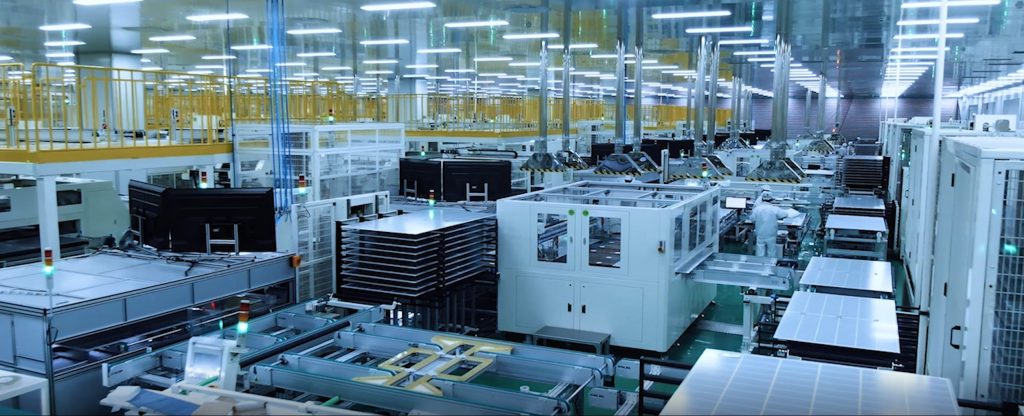
Here’s the kicker: data shows microcracks and PID risk often start upstream, long before field life begins. A line may pass final IV tests but still ship modules with latent issues. So what’s really going on behind the glass, and what can teams do about it? Let’s unpack the parts you rarely see, and compare what works—and what holds you back. Onward to the deeper layer.
Part 2: The Deeper Layer—Where Traditional Lines Fall Short (Comparative Insight)
Where do traditional lines fall short?
Let’s get technical and practical. Earlier we talked about the “moments you don’t see.” Here’s the deeper cut. Classic pv module manufacturing lines rely on after-the-fact checks: off-line EL imaging, end-of-line IV tests, and manual sign-offs. These steps find defects, but only after they spread. A missed stringer misalignment or uneven tabbing pressure can ripple through lamination, showing up as cell microcracks later—funny how that works, right? Without in-line metrology and closed-loop control, the process drifts. And drift is expensive.
Three repeat offenders stand out. First, tool islands. Each machine runs well alone, but the flow between them breaks. No shared MES logic, so edge computing nodes can’t tune parameters in real time. Second, reactive quality. You detect PID risk after lamination, not while EVA gel content or layup tension is drifting. Third, blind efficiency. Stringers quote cycles per minute, but don’t factor busbar wetting, solder joint fatigue, or thermal profile drift across shifts. The result: unstable module yield and higher scrap. Look, it’s simpler than you think—pair in-line EL and PL mapping with feedback to the stringer, calibrate lamination recipes to encapsulant and glass lot, and add SPC rules to ovens and power converters on test benches. Add a light-touch AI vision layer for crack and BB paste anomalies. These steps shrink defect escape and stabilize IV curve spread without slowing the line.
Part 3: Looking Ahead—Principles That Change the Game
What’s Next
Now, let’s go forward with a semi-formal lens. The next wave replaces “inspect-then-ship” with “control-then-confirm.” Here’s how. First, new technology principles: sensor fusion and closed-loop control. In-line EL plus photoluminescence can score cell health before and after stringing; those signals feed edge computing nodes that nudge tabbing temperature, flux dose, and conveyor speed. Second, digital twins for ovens and laminators. A physics-lite model learns how your EVA, POE, and glass thickness affect heat transfer, then auto-adjusts recipe profiles. Third, data harmonization. A unified MES ties lot genealogy to EL defect maps, so you can trace a hotspot to a certain busbar paste or silver grid print. This isn’t theory—it’s the practical backbone for stable pv module manufacturing. And yes, it feels like extra setup—until you watch rework drop and uptime rise.
Compare today’s best-in-class with legacy lines and the pattern is clear. Fewer “hero operators,” more predictable output. Less over-lamination to mask voids, more right-first-time assembly. And as cell tech shifts (TOPCon, heterojunction), these principles matter even more because solder windows narrow and cell stress tolerance shrinks. The path ahead favors factories that treat EL/PL images as control signals, not just reports; that align stringer pitch with cell warpage tolerance; that audit bypass diode solder and junction box potting as reliability gates. To choose well, track three metrics: 1) Yield stability over 30 days (% spread, not single-day peak), 2) EL defect escape rate to end-of-line (ppm), and 3) OEE plus cost per watt including rework and scrap. If these trend right, your panels won’t just pass—they’ll last—funny how steady beats flashy, right? Shared with care, not hype, from folks who’ve watched lines learn. LEAD