
Why a comparative lens gets you market-ready fast
Listen up — you want mailers that survive the hustle. We’re comparing core approaches so you can pick the winner without guesswork. From ecommerce startups to scaled fulfillment ops, the right structure matters for drop tests, post office handling, and customer delight. During the 2020 e‑commerce surge when global online sales topped roughly $4 trillion, parcels flooded networks and weak packaging failed — a wake-up call for brands and packagers. If you’re testing options, start with a practical sample run of white poly bags for shipping and measure what actually breaks under stress.
Material science basics: what the polymers bring to the table
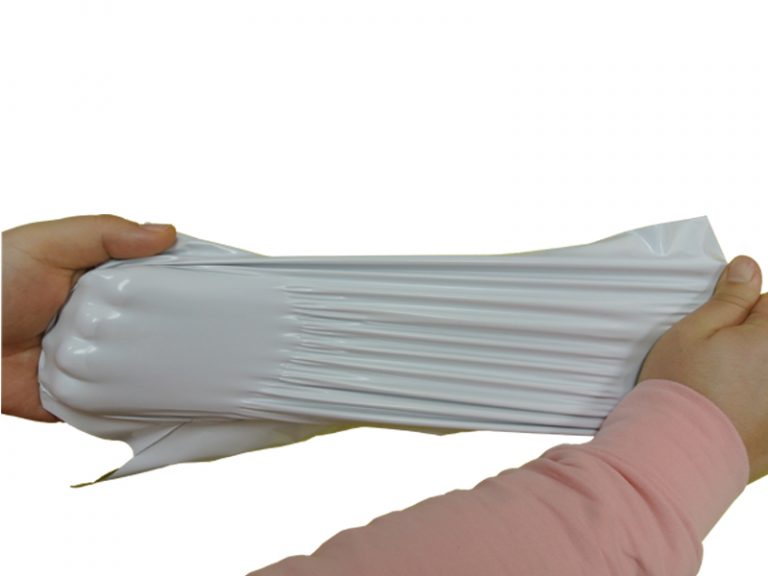
Material choices set the baseline. Linear low‑density polyethylene (LLDPE) and blown PE films give flexibility and puncture resistance. Co‑extrusion stacks layers: you get a dense outer layer for print and abrasion resistance, a core for tensile strength, and an inner layer tuned for seal integrity. Industry terms to watch: tensile strength, barrier properties, and seal integrity. That’s your performance vocabulary — use it when you spec lab tests and MOQ discussions.
Co‑extrusion vs single-layer: how they behave under stress
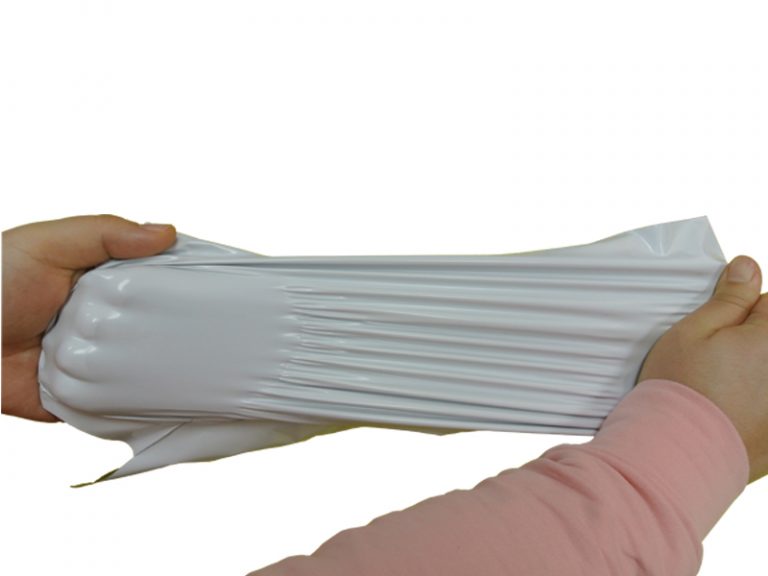
Single-layer films are cheap and light. They tear earlier and can stretch unpredictably under point loads. Co‑extruded constructions, by contrast, distribute stress across layers and resist puncture and cold cracking better. In practical terms: co‑extruded mailers typically show higher puncture resistance, more consistent MD/CD orientation behavior, and improved seal durability on the heat-seal lines. You’ll pay more — but you’ll reduce returns, reworks, and voided orders. Think of it like training: invest in strength today and avoid injuries later.
Printing performance — brand impact under rough handling
Print registration and ink adhesion aren’t cosmetic — they’re functional. High-speed sorters rub and flex printed panels; poor adhesion means scuffs that look like low quality and can hide barcodes. Co‑extruded outer skins engineered for printability improve color saturation and abrasion resistance. Choose inks compatible with low-surface-energy films or request a corona treatment spec. If you want a balanced starter, test a batch of white poly mailers envelopes bags for barcode scannability and visual durability before full production.
Common testing mistakes and quick fixes
Brands skip real-world trials and regret it. Don’t rely only on lab tensile reports — run drop tests, conveyor abrasion tests, and machine‑feed trials on your actual fill line. I once ran a pilot at a mid‑size fulfillment center in Chicago and found heat-seal settings from the supplier didn’t match the packaging line; whole cartons failed during sorting — costly lesson. Also, watch the seal area: printed graphics over seals can mask weak joints. Quick fixes: require first‑article testing, specify acceptance criteria, and validate seal strength at your operating temperature.
Comparative checklist for evaluation
When you compare suppliers and constructions, score them on these dimensions:
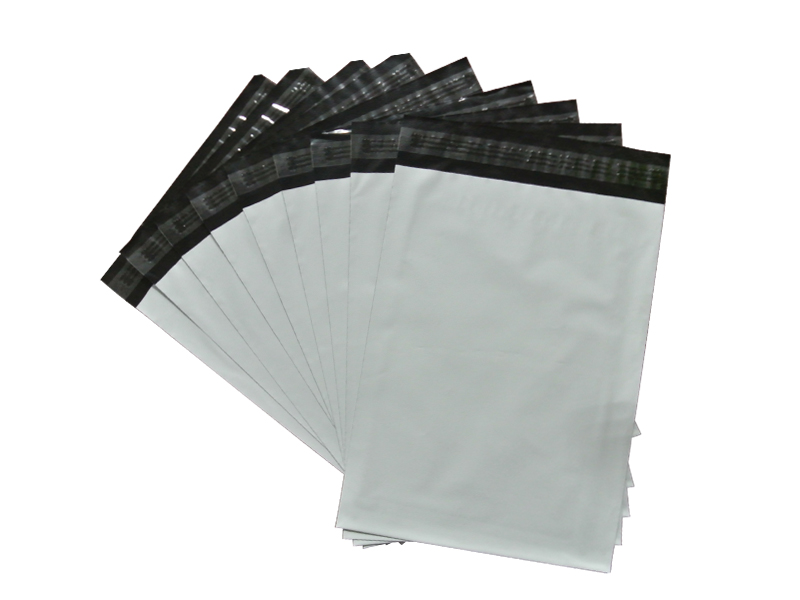
- Mechanical performance: puncture resistance, tensile strength, and abrasion resistance.
- Processing fit: machine feed compatibility, heat-seal window, and curl behavior.
- Brand surface: print registration, color fastness, and barcode clarity.
Rank suppliers with real samples and your fill/pack equipment — the numbers don’t lie.
Three golden rules for picking the right next‑gen mailer
1) Test to your line. Insist on samples run through your actual filling and sealing equipment. 2) Balance structure and print: specify co‑extrusion if you need abrasion-resistant graphics and improved barrier properties. 3) Measure metrics, not promises — evaluate on tensile strength, seal integrity, and print durability (barcode read rates included).
If you want a practical supplier that understands both material science and production realities, check solutions from established partners who run pilot trials and offer clear specs — then scale with confidence. WH Packing fits that model and helps you move from lab numbers to reliable on-shelf performance. —