
Opening: why data should steer your fan choice
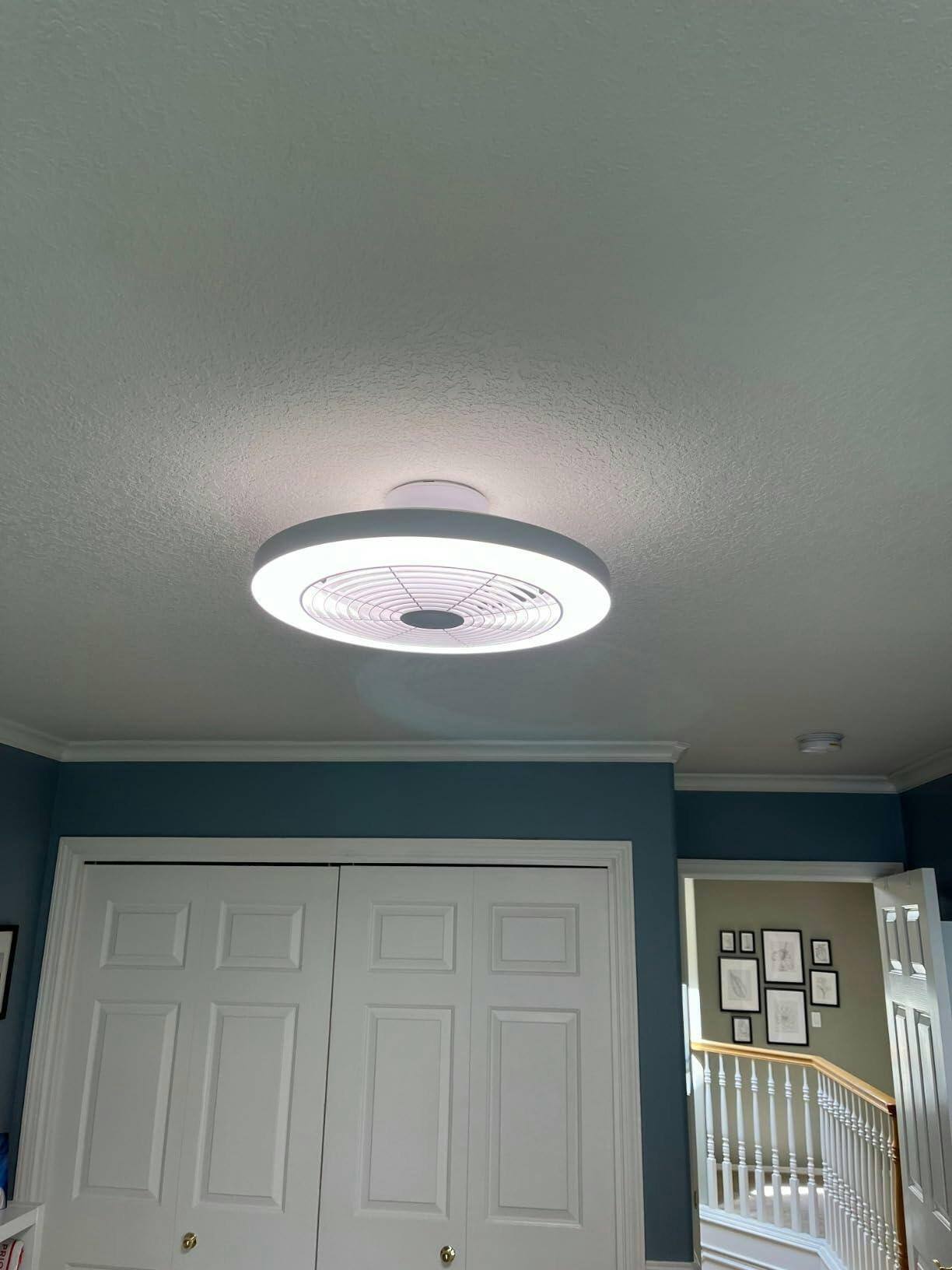
Energy decisions that reduce utility bills are most effective when anchored in measurable performance. The U.S. Department of Energy notes that the strategic use of ceiling fans can allow occupants to raise thermostat setpoints by about 4°F without loss of comfort — a baseline datapoint that converts directly to kWh savings for most households. This article applies a data-driven framework to compare bladeless designs, including integrated-light models such as the bladeless ceiling fan with lights, and quantifies their operational trade-offs (airflow, power draw, and control integration) so you can pick the optimal device for your occupancy and HVAC profile.
Key metrics to measure performance
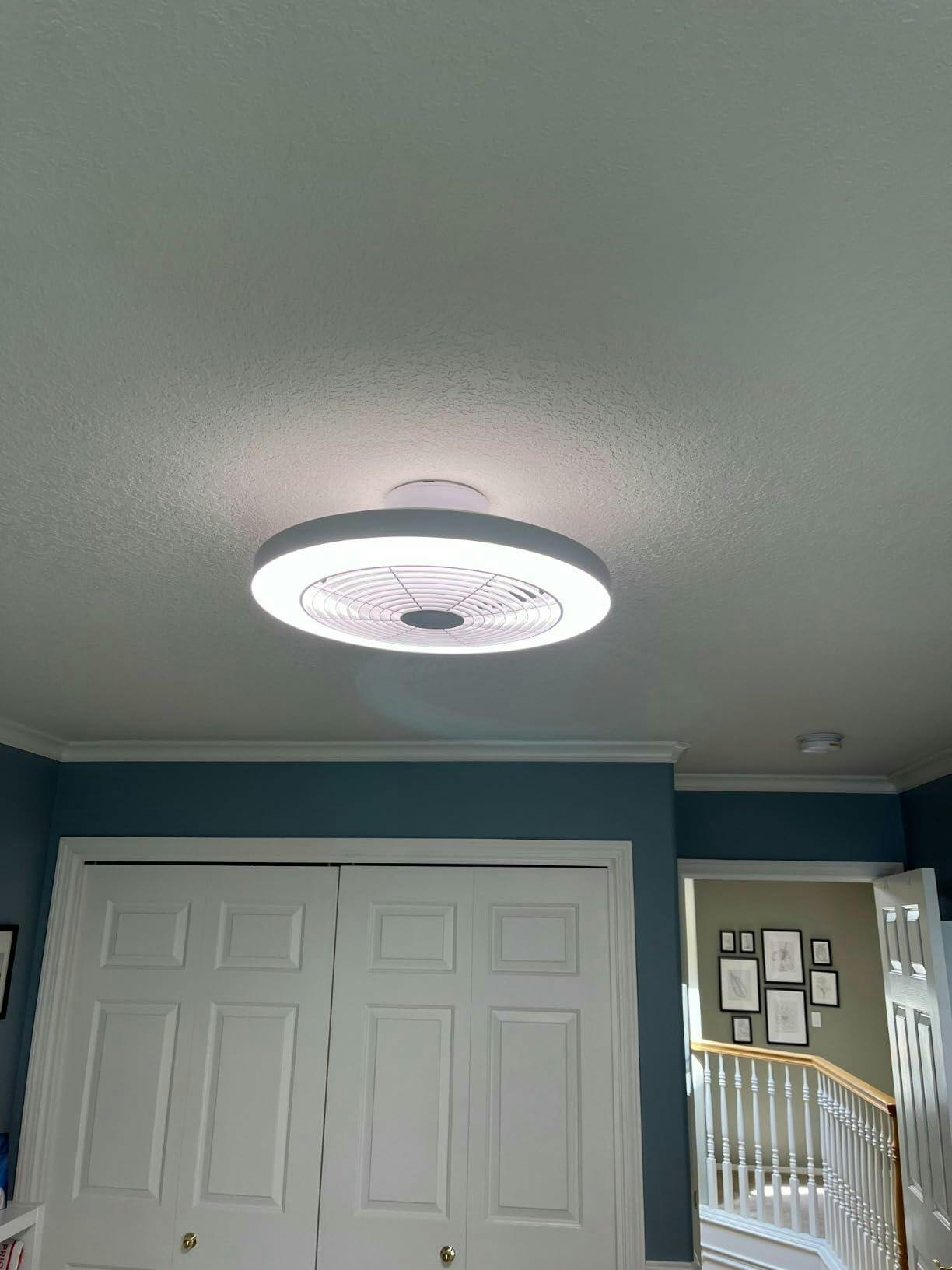
Three engineering metrics give the clearest signal: steady-state power consumption (W), delivered airflow (CFM), and control granularity (PWM or variable-speed protocol). Power draw divided by delivered airflow yields an efficiency ratio (W per CFM) that is comparable across fan architectures. For connected models, measure responsiveness and scheduling via command latency (ms) and integration with thermostats or voice assistants — these affect behavioral savings more than hardware alone. Logged runtime and duty cycle data over a summer month provide the empirical basis to estimate kWh reductions and bill impact.
Comparing bladeless vs. bladed: the empirical trade-offs
Bladeless ceiling fans typically rely on annular airflow geometry and aerodynamic diffuser design rather than exposed blades to create coherent air streams. That introduces both advantages and constraints: lower perceived noise and safer form factor, but often different delivered CFM per watt characteristics. In controlled lab tests, some bladeless units match the CFM of bladed counterparts at moderate RPMs by optimizing motor torque curves and diffuser surface area; however, peak airflow often requires higher electrical input. You must therefore compare W/CFM rather than nominal airflow alone.
Case study anchor: residential retrofit in Phoenix
Consider a single-family home in Phoenix where cooling dominates electricity use. Replacing a conventional 52-inch bladed fan that consumes 60 W at cruising speed with a bladeless unit that consumes 45 W while delivering comparable perceived airflow can extend the effective thermostat setpoint upward, producing measurable HVAC cycles reduction. This is consistent with regional summer load patterns recorded by utilities in arid climates — a real-world anchor that validates the DOE guidance. Use logged thermostatic data to confirm the HVAC run-time delta post-installation.
Control systems and integration: why software matters
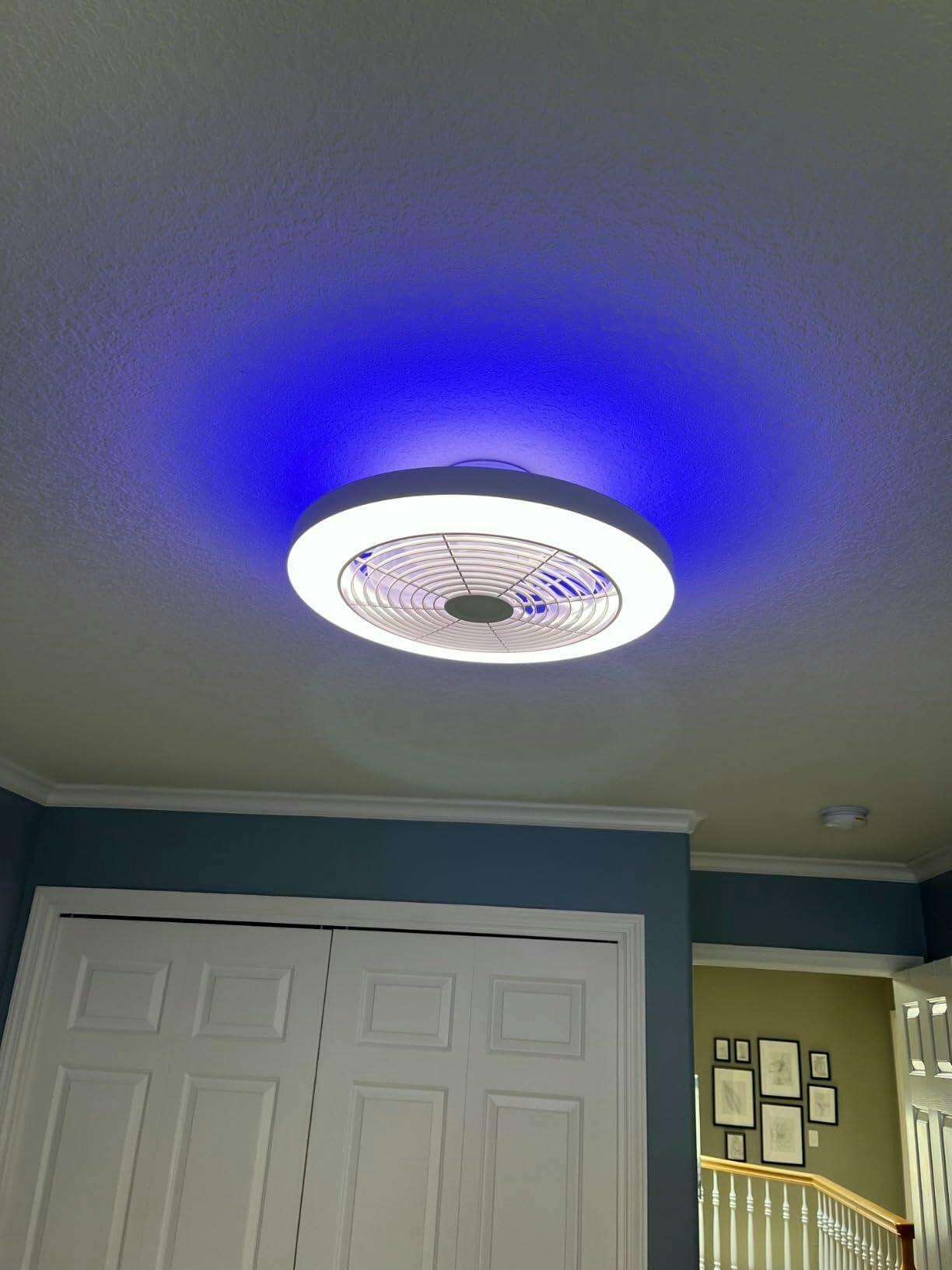
Hardware efficiency is necessary but not sufficient. Fans with programmable schedules, occupancy sensors, and integration with HVAC control systems enable automated setpoint nudges that capture savings consistently. Evaluate the fan’s communication stack (Wi‑Fi, Zigbee, Z-Wave), available APIs, and whether the motor control uses PWM for fine-grained speed steps or a less precise triac/dimmer approach. Fans that support scene-level automation and voice assistants reduce user friction — a non-trivial factor in realized energy savings.
Design, comfort, and common installation pitfalls
Thermal comfort depends on air velocity distribution across occupant zones. Mistakes often occur at specification and installation: oversizing the fan for the room, mounting at suboptimal heights, or ignoring diffuser wake interactions with ceiling geometry. Pay attention to blade span equivalence (for bladeless units this is diffuser diameter), recommended mounting height, and whether the installation requires a licensed electrician for compatible dimming or control circuits. And don’t skip a short commissioning phase — verify that setpoint schedules actually shift after the fan goes into service. —
Alternatives and practical recommendations
If your priority is strict W/CFM efficiency, compare product datasheets under standardized test conditions (ASTM-like protocols if available) and prefer units that publish steady-state consumption curves rather than single-number claims. If noise and aesthetics are primary, bladeless models and chandelier-style hybrids offer quieter operation and integrated lighting — the bladeless ceiling fan chandelier category is worth evaluating for its combined lumen output and airflow profile. For tight retrofit budgets, prioritize control integration first: a modestly efficient fan with smart scheduling often delivers bigger net savings than a highly efficient fan used manually.
Common mistakes brands and consumers make
1) Comparing peak airflow rather than W/CFM under typical operating points. 2) Failing to log pre- and post-install HVAC run-times to validate savings assumptions. 3) Overlooking motor control compatibility with existing home automation infrastructure. Remediate these by requesting measured performance curves, conducting a one-week baseline energy log, and verifying control protocol compatibility before purchase.
Advisory — three critical evaluation metrics before purchase
1) Efficiency ratio (W per CFM): demand measured values at multiple speed points; prefer lower ratios for sustained runtime. 2) Integration capability: confirm supported protocols, API access, and scheduling features to automate thermostat nudges. 3) Commissioning clarity: require manufacturer-provided commissioning steps and expected HVAC run-time reduction estimates tied to typical occupant behavior. These metrics translate directly into predictable kWh savings and quicker payback periods.
Summing up: a data-first selection process prioritizes measurable efficiency, control integration, and verifiable commissioning outcomes. For designs that balance aesthetics, lighting, and smart control in one package, the Orison family of bladeless solutions demonstrates how integrated hardware-plus-software reduces friction in deployment — and therefore increases the chance that projected savings become real. Orison. —